Market Watch
Market Watch: 30 to 50 Meter Motor Yachts in the Americas, Spring 2026
Inventory is thinning at the top of the bracket and aging at the bottom. A working read on asking prices, days on market, and where the leverage actually sits this spring.

The 30 to 50 meter brokerage market in the Americas entered spring 2026 split cleanly down the middle of its own size bracket. Above roughly 40 meters, quality inventory is thin, well-bought boats are trading near ask, and the leverage sits with sellers who are in no hurry. Below 40 meters, listings have accumulated, the average hull on the market is getting older, and buyers who know the maintenance arithmetic are naming their price and getting it. Treating the bracket as one market is the fastest way to misread both halves.
The numbers behind that split, drawn from the listing flow and closed-sale reporting our desk tracks. Active 30 to 50 meter inventory in the Americas sits mid single digits percent higher than a year ago, but the growth is almost entirely 30 to 38 meter boats built before 2012. Median days on market in that lower cohort has stretched past 300; in the 40-meter-plus cohort built after 2016 it is closer to 140, and the genuinely turnkey examples are trading in under 90. Sale-to-ask ratios tell the same story from the other side: a few points either side of 93 percent up top, while tired lower-bracket listings are closing in the low 80s after one or more public price cuts.
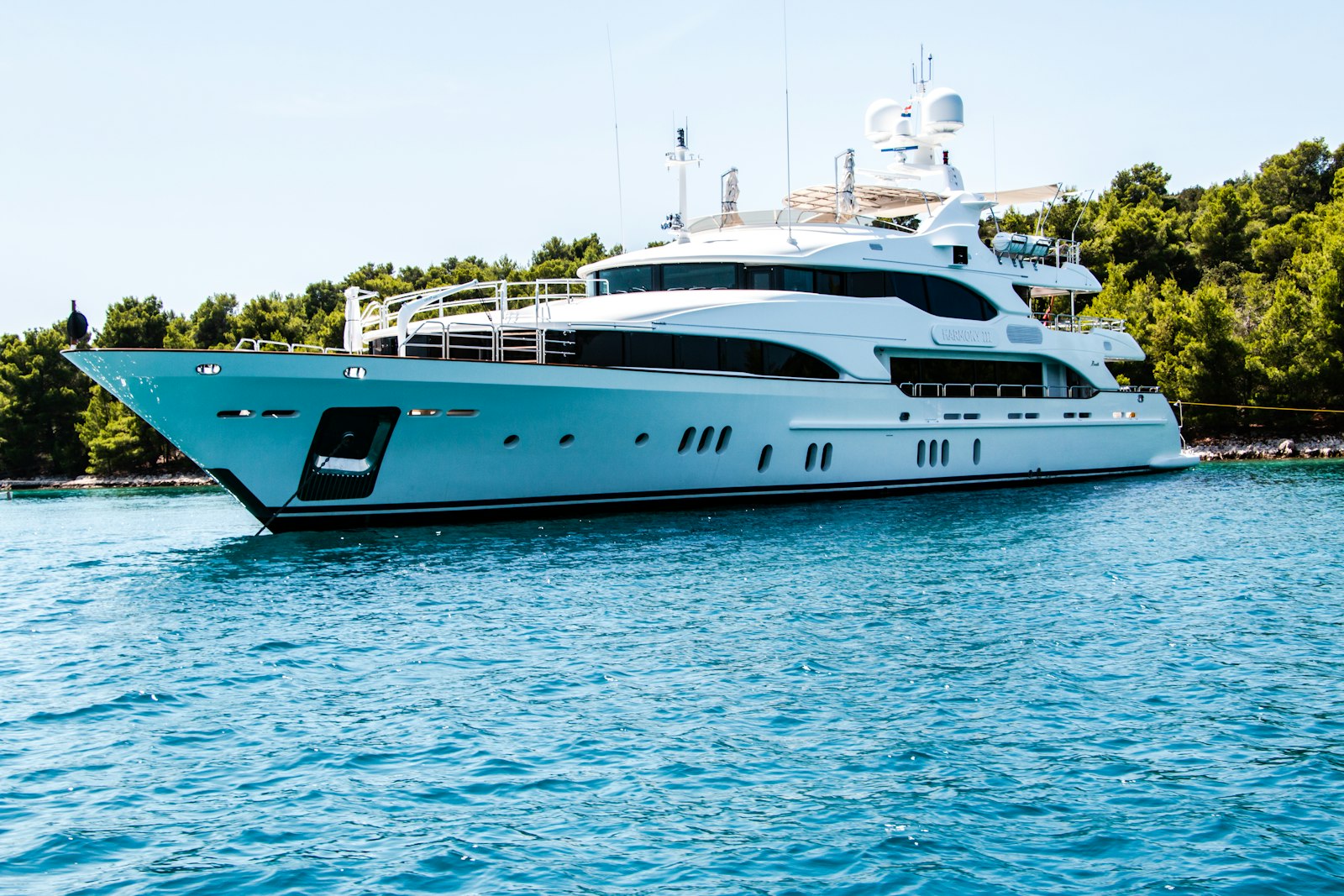
What is propping up the top half is the new-build pipeline, or rather the wait attached to it. Slots for a custom or semi-custom delivery in this size range run three to four years out at the established builders, and a meaningful share of buyers who walked into that quote walked back out into the brokerage market. Those buyers want late-model, lightly used, fully sorted boats, and they are paying for the privilege of skipping the queue. A three-year-old 44-meter with one fastidious owner is the single most liquid asset in the bracket right now, and brokers holding one know it.
The bottom half's problem is arithmetic, not sentiment. A 2008-build 34-meter may list at a tempting number, but any competent buyer's captain prices the next thirty-six months on top of it: paint coming due at $400,000 to $600,000, original generators and chillers at end of life, a stabilizer plant with orphaned electronics, and crew spaces a generation behind what retains crew today. Add it up and the cheap boat lands within reach of a younger one with none of those liabilities. Sellers anchored to what they paid in the 2021 surge are the reason days on market in this cohort keeps climbing; the ones who price against the refit math instead are the only ones closing.
Charter capability has hardened from a nice-to-have into a pricing input. Boats in this bracket with a documented charter history, a compliant flag and class status, and the spring demand list aboard, zero-speed stabilization first among equals, are commanding visible premiums and shorter marketing periods, because the buyer is underwriting some of the running cost with revenue from delivery week one. Boats configured purely for private use are not unsellable, but the buyer pool is shallower and the negotiation reflects it. The spread between otherwise comparable charter-ready and private-only boats now shows up clearly in closed numbers, several points of ask and a season of waiting.
Geography is doing quiet work in the data. Florida remains the clearinghouse: boats positioned in Lauderdale or Palm Beach for the spring show circuit saw double the inquiry volume of identical listings sitting in the Northeast or on the West Coast. The Pacific side remains structurally undersupplied with quality 30 to 50 meter stock, and the handful of strong boats that listed there this spring traded faster than their Atlantic sisterships. Buyers willing to transport are arbitraging that gap; sellers west of Panama should price like they know it exists.
For buyers, the playbook this spring is patience below 40 meters and speed above it. In the lower cohort, let days on market do your negotiating, lead with the refit arithmetic, and never be the person who pays the 2021 anchor price. Up top, decide your criteria before the boat appears, because the good ones are trading in weeks, and a buyer who needs a month to assemble a survey team is a buyer who finishes second. In both halves, the survey-season calendar matters: a deal struck now closes on summer yard availability, while a deal struck in September fights the whole fleet for lifts.
For sellers, the read is just as direct. A post-2016 boat in honest condition is in a seller's market and should be priced with confidence and shown without apology. An older boat carries its refit queue into every negotiation whether the listing mentions it or not, and the choice is to spend against the list before marketing or discount against it during. The boats stuck past 300 days are mostly the ones whose owners chose neither. The market this spring is not difficult. It is merely informed, and it is pricing the bracket the way a captain would.
The Short Version
- The bracket has split: thin, fast-trading inventory above 40 meters, aging and slow inventory below it.
- Median days on market: under 140 for post-2016 boats over 40 meters, past 300 for pre-2012 boats under 38 meters.
- Three-to-four-year new-build queues are pushing buyers into late-model brokerage stock at near-ask prices.
- Buyers are pricing the refit queue, paint, generators, stabilizers, into every older listing. Sellers anchored to 2021 prices are the ones not closing.
- Charter-ready, stabilized, compliant boats carry a measurable premium and a shorter marketing period.
Captains Grid Editorial
Market Desk
Keep Reading
Market Watch
Pricing the 2026/27 Caribbean Charter Season
Caribbean charter rates have held the gains of the post-2021 boom, but the market underneath has split: festive weeks clear at premiums while shoulder weeks quietly discount. A look at where 2026/27 rates are settling, and what owners should actually expect to net.

Owner Intelligence
What First-Time Yacht Buyers Miss Before the Survey
The survey is not the beginning of due diligence, it is the end of it. A captain's walkthrough before you book the haul-out catches the expensive problems brokers are not paid to mention.
Red Flag File
The Difference Between a Broker's Listing and a Captain's Inspection
A listing tells you what the boat has. An inspection tells you what the boat is. The gap between the two is where deposits go to die.